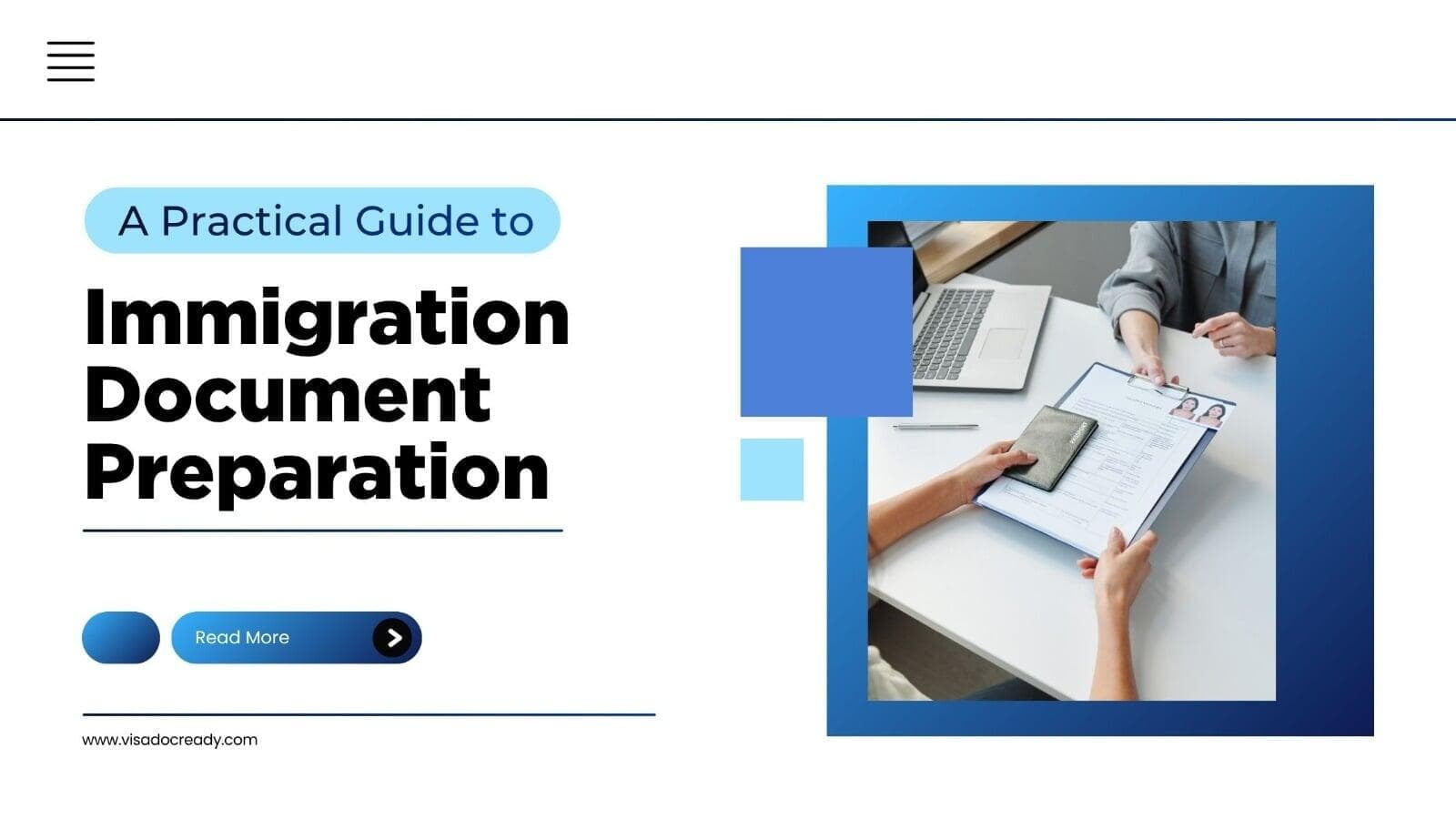
Preparing documents for immigration can feel overwhelming, especially when you are dealing with forms, certificates, identification records, employment documents, and other supporting paperwork. The process becomes even more challenging when you are unsure which documents you need or whether the information across your records is consistent.
Good immigration document preparation can make this stage more organised. Instead of collecting documents at the last minute, applicants can review their paperwork early, identify gaps, and prepare the information they may need before moving forward with their application.
While requirements vary depending on the country, visa type, and individual circumstances, having a structured approach can make document preparation much easier.
Why Immigration Document Preparation Matters ?
Immigration applications often require information from several areas of your personal and professional life. Your identity, education, employment, finances, travel history, and family circumstances may all need to be supported by documents.
A missing or outdated document may lead to additional requests or delays. Inconsistent information can also create unnecessary questions during the review process.
This is why preparing documents carefully is an important part of getting ready for a visa application. It gives you an opportunity to check your paperwork before you submit anything.
Start With a Document Checklist
One of the easiest ways to organise the process is to create a document checklist based on the requirements of your specific visa or immigration pathway.
Your checklist may include:
Passport and identity documents
Birth or marriage certificates, where applicable
Educational qualifications
Employment and experience records
Financial documents
Police or background certificates, where required
Medical-related documents, where required
Photographs and application forms
Supporting documents relevant to your circumstances
The exact requirements will depend on your situation. A general list should not be treated as a substitute for checking the official requirements for your particular application.
Check Your Passport and Identity Documents
Your passport is usually one of the key documents for visa processing. Before preparing the rest of your paperwork, check that your personal details are correct and that the passport meets the validity requirements for your intended application.
Compare the spelling of your name, date of birth, and other details with your other documents. Even small differences can create confusion later.
If your name has changed or different versions of your name appear across documents, identify this early and determine whether additional supporting documentation may be required.
Organise Education and Employment Records
Educational and employment documents are particularly important for applications where qualifications or work experience form part of the requirements.
Collect relevant degrees, diplomas, certificates, licences, employment letters, experience certificates, or other records that demonstrate your background.
Check that employment dates, job titles, company names, and other important details are consistent across your CV and supporting documents.
If documents need to be translated, certified, or verified, check the specific requirements applicable to your application before proceeding.
Review Financial and Supporting Documents
Depending on the immigration pathway, applicants may need to provide financial evidence or other supporting records.
These could include bank statements, income records, tax documents, or evidence relating to accommodation or sponsorship. The type and period of evidence required can vary considerably.
Avoid preparing financial documents based on assumptions. Always check the current requirements for your particular visa or immigration process.
Other supporting documents may also be relevant depending on individual circumstances. These could include relationship documents, police certificates, medical records, or evidence of previous travel.
Check for Missing or Inconsistent Information
Once you have collected your documents, don't immediately move on to the application. Take some time to review everything together.
Look for differences in:
Names and spelling
Dates of birth
Employment dates
Addresses
Passport numbers
Qualification details
Other important personal information
A simple visa check at this stage can help you identify information that needs clarification or correction.
It is also useful to check whether documents are readable and complete. Poor-quality scans, missing pages, or incomplete records can make document review more difficult.
Keep Your Documents Organised
Digital organisation can make the process much easier, particularly when you need to upload several documents.
Create clearly labelled folders for identity, education, employment, financial records, and other supporting documents. Use simple file names so you can quickly identify each document.
Keep original documents safely stored and use appropriate copies or digital versions when the application requirements allow them.
Having an organised document set can also make it easier to respond if additional information is requested later in the visa process.
Prepare Early Rather Than at the Last Minute
One of the biggest advantages of starting early is having time to deal with unexpected issues.
A certificate may need to be obtained from another organisation. A document may need translation. An employment record may need to be requested from a previous employer. A passport may need renewal.
These tasks can take time. Starting your immigration document preparation early gives you more flexibility and reduces the pressure of trying to collect everything immediately before an application deadline.
Getting Your Documents Ready With Confidence
Immigration document preparation is ultimately about being organised and knowing what you have before you move forward. A clear checklist, careful document review, and early preparation can make the process easier to manage.
VisaDocReady helps applicants assess and organise their document readiness so they can better understand what may need attention before proceeding. The service focuses on document preparation and readiness rather than lodging visa applications or providing legal immigration advice.
Because requirements can change between countries and visa categories, applicants should always check the latest official information relevant to their circumstances before submitting an application.
When your documents are organised, consistent, and ready, you can approach the next stage of your immigration journey with greater clarity and confidence.